
APOE and Neurodegenerative Diseases
Project Overview
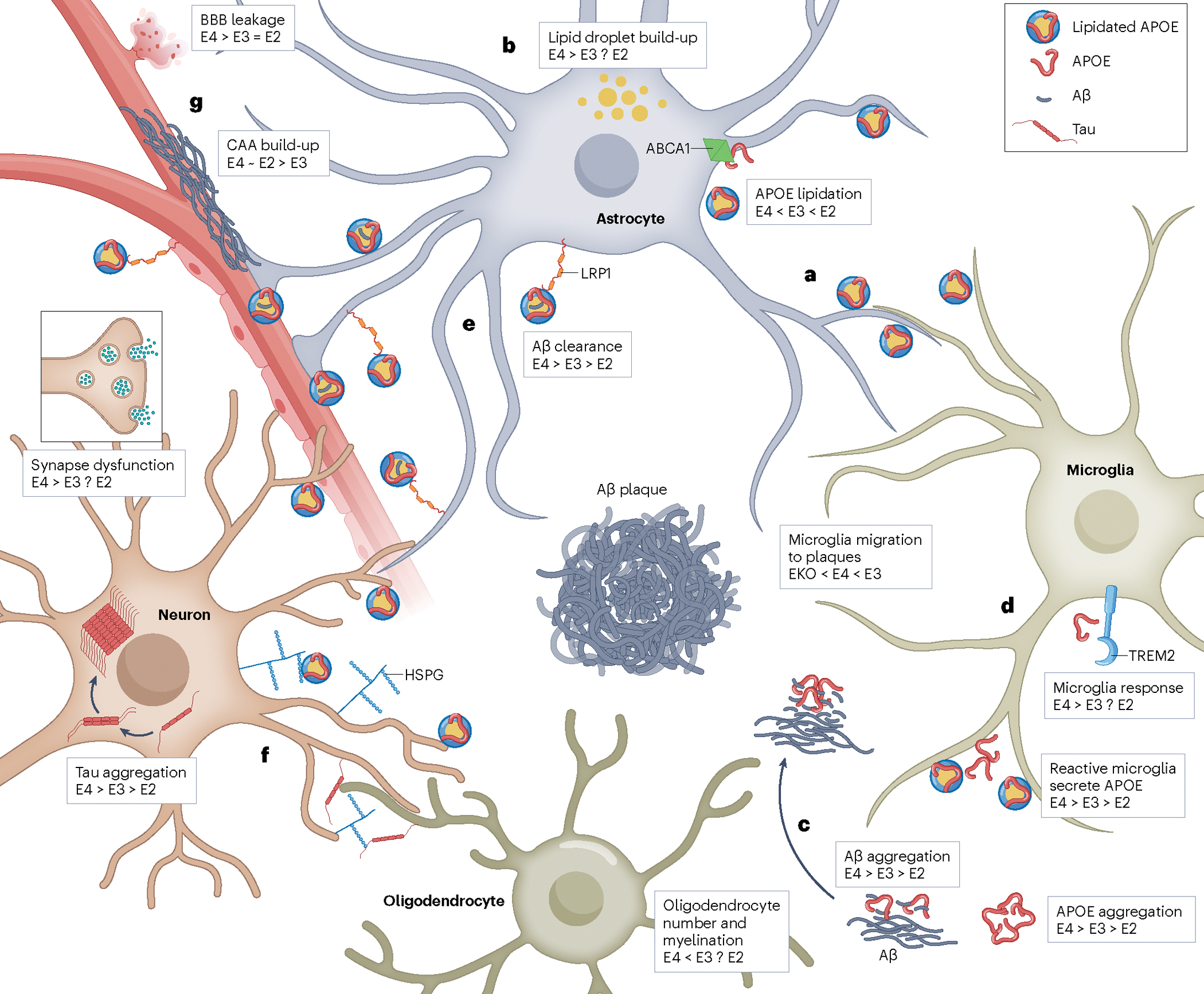
Apolipoprotein E (APOE), a lipid transport protein primarily expressed by astrocytes and microglia in the central nervous system, plays a multifaceted role in maintaining blood-brain barrier (BBB) integrity and regulating neuroinflammation. Recent work highlights how isoform-specific effects of APOE, particularly the pathogenic APOE4 variant, contribute to BBB dysfunction, increased neurodegeneration, and cognitive decline. We investigate the mechanistic underpinnings by which APOE4 disrupts astrocyte-endothelial signaling, leading to BBB permeability (Jackson et al., Brain, 2022), and how APOE-driven pathology exacerbates Alzheimer’s disease (AD) progression (Jackson et al., Nat Rev Neurol, 2024). In parallel, we explore therapeutic strategies such as APOE2 gene therapy, which has been shown to reduce amyloid burden and neuroinflammation in AD mouse models (Jackson et al., Mol Ther, 2024). Together, our research aims to define the central and peripheral roles of APOE in neurovascular dysfunction and neurodegeneration.
Publications
- Jackson, R. et al. (2022). “APOE4 derived from astrocytes leads to blood-brain barrier impairment.” Brain 145(10),3582-3593.
- Jackson, R. et al. (2024). “Multifaceted roles of APOE in Alzheimer disease.” Nature Reviews neurology 20(8):457-474.
- Jackson, R. et al. (2024). “APOE2 gene therapy reduces amyloid deposition and improves markers of neuroinflammation and neurodegeneration in a mouse model of Alzheimer disease.” Molecular Therapy