
Research
The Hyman lab studies clinical-pathological relationships in Alzheimer disease, using post mortem human tissue, animal models, and cell systems to understand the neurobiology of neurodegeneration. Multiphoton microscopy allows longitudinal study of animal models, leading to hypotheses about amyloid, tau, and synaptic changes associated with Alzheimer disease.
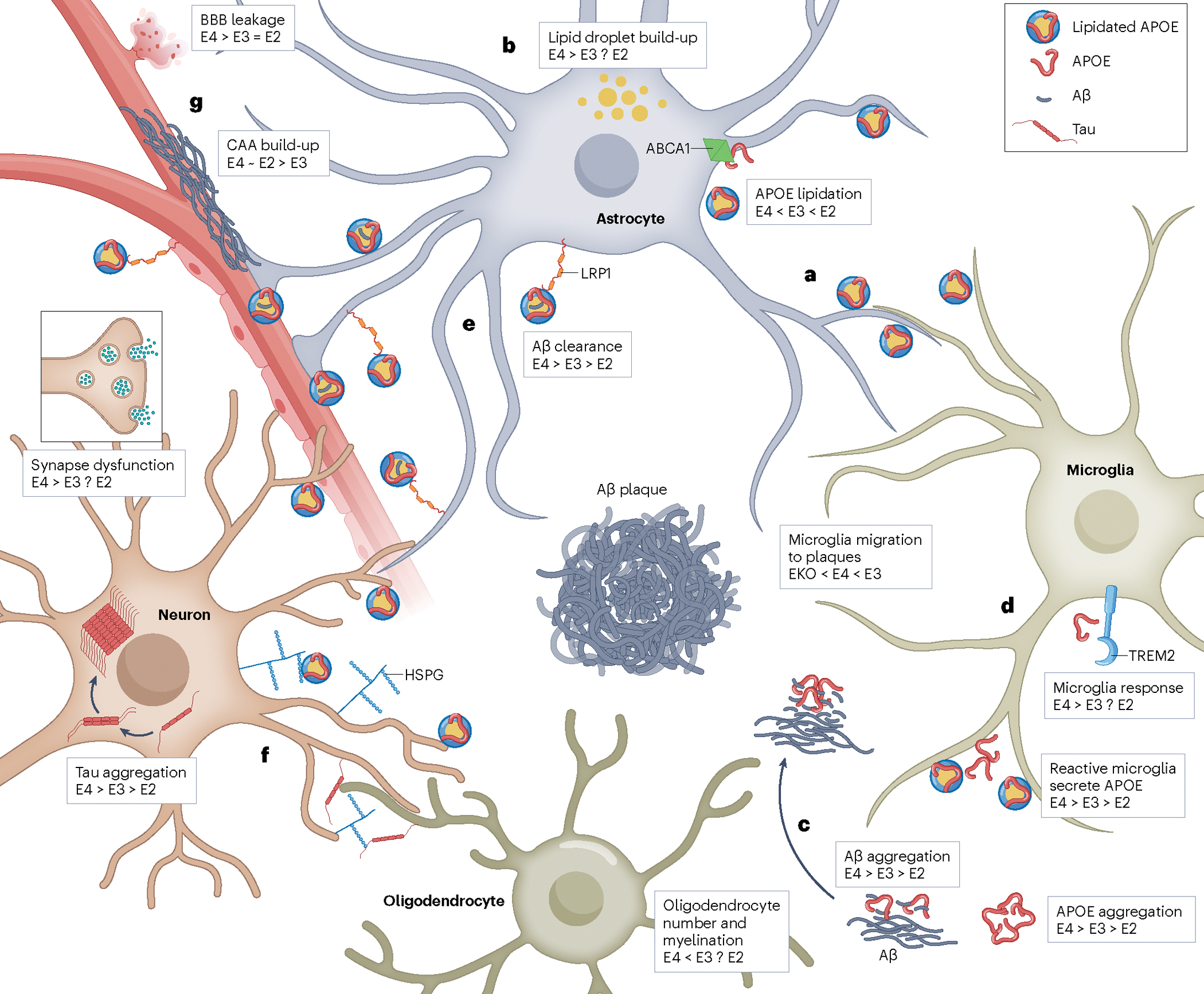
APOE and Neurodegenerative Diseases
ActiveProject Overview
Apolipoprotein E (APOE) is a lipid transport protein primarily expressed by astrocytes and microglia in the central nervous system; it plays a multifaceted role in maintaining blood-brain barrier (BBB) integrity and regulating neuroinflammation. Since neuroinflammation and abnormal cytoplasmic accumulations are pathological hallmarks in almost all patients with Alzheimer’s disease, we investigate the mechanistic underpinnings by which APOE4 disrupts astrocyte-endothelial signaling and leads to BBB permeability. Recent work highlights how the APOEε4 allele might prime microglia towards a phagocytic state and how these changes result from a cell-specific gain of function effect of ApoE4. We are also investigating the potential attenuation of Alzheimer’s symptoms through APOE ε2 via gene therapy approaches.
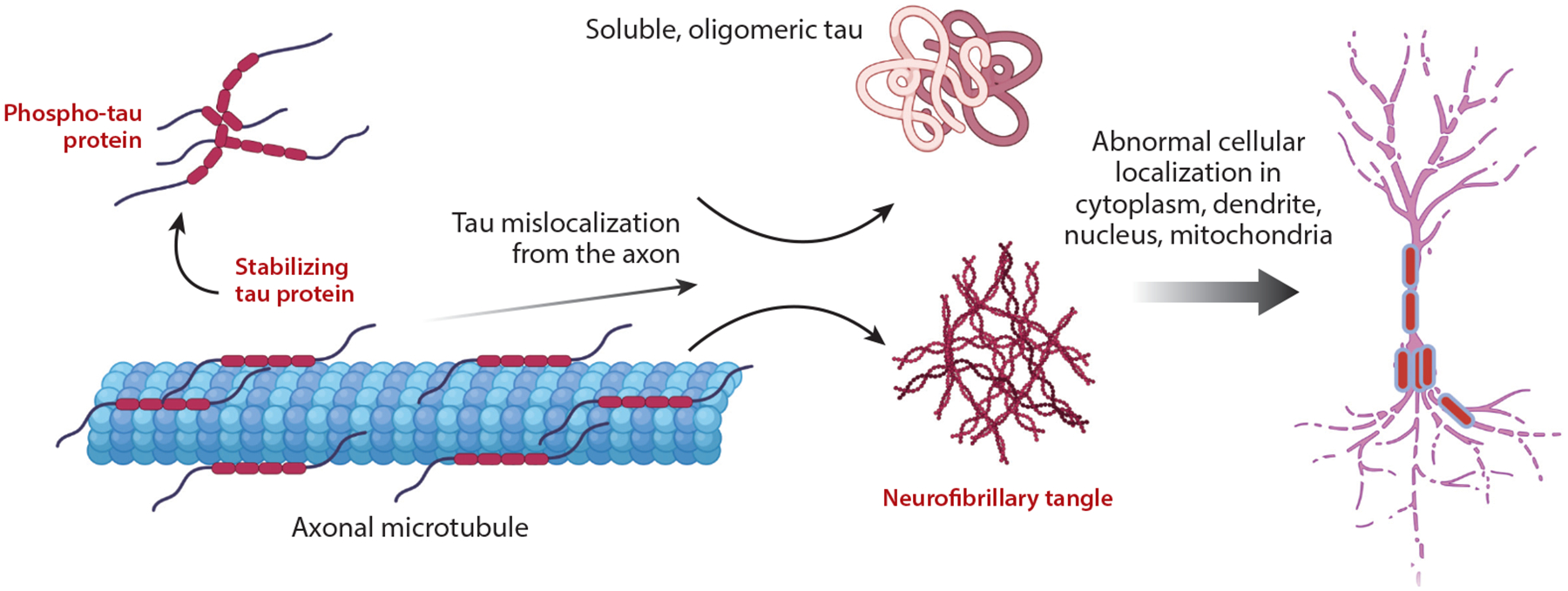
Tau Pathology and Mechanisms
ActiveProject Overview
Neurofibrillary tangles have been shown to anatomically correlate with areas of the brain that undergo neuronal loss. To help elucidate this relationship, we have highlighted the distinct roles of both fibrillar and nonfibrillar tau in disrupting normal cognitive functions—with an emphasis on the toxicity of non-fibrillar species. By approaching this problem from multiple angles—tau kinetics, propagation rates in the brain, identifying natural isoforms, utilization of advanced biophysical methods including nonlinear optics and, most recently, cryo-EM—we quantify unique tau proteoforms. Some of our recent publications explore tau’s relationship to neuronal death and tau’s impact on neuronal firing critical for memory.
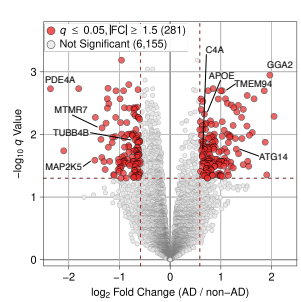
Transcriptomics and Neurodegeneration
ActiveProject Overview
In the last several years we have been able to leverage new, stronger omics technologies to help analyze longitudinal changes in human brain physiology, utilizing human brain material from patients who had donated tissue for research. These studies reveal unexpected connections of toxicity and cell death pathways, opening new avenues towards prevention of neurodegeneration.
Publications
- Das, S. et al. (2023). “Distinct transcriptomic responses to Aβ plaques, neurofibrillary tangles, and APOE in Alzheimer’s disease.” Alzheimer’s & Dementia 20(1), 74-90.
- Wachter, A. et al. (2024). “Landscape of brain myeloid cell transcriptome along the spatiotemporal progression of Alzheimer’s disease reveals distinct sequential responses to Aβ and tau.” Acta Neuropathologica 147(1), 65.
- Collins, M. et al. (2025). “Ubiquitin-Proteasome System Dysregulation in Alzheimer’s Disease Impacts Protein Abundance.” [Preprint]